Plaster and stucco
Internal plaster is usually done in two layers. Core plaster brings the masonry true and gives the wall strength, then stucco or a skim coat finishes it smooth ready for paint. Where the substrate is already true, the core coat can be skipped and a thin skim applied directly. Which applies to you is something the bricklayer judges from the state of the masonry, not from a photo on a website.
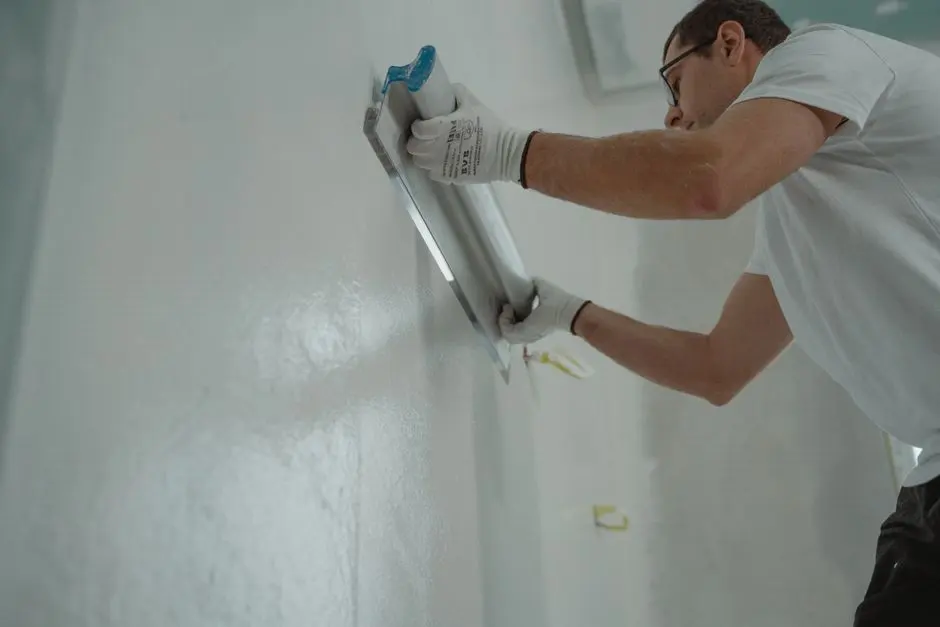
Core plaster: when and why
A core coat goes on where the masonry is crooked, rough or has just been altered. It evens out differences a thin layer would never hide and creates the base everything else holds onto. It is applied by hand or by machine; machine application is faster over large areas, hand work pays off in smaller flats and in broken-up spaces where a lot of hand finishing is needed anyway.
The thickness is not a matter of preference but of how crooked the wall is. The worse the wall, the more material goes on and the longer the layer takes to cure. Curing is usually the biggest surprise in the schedule: plastering a room is a day's work, but time passes before anything may be skimmed, tiled or painted over it. After a site visit the bricklayer will tell you how many days are worked and how many are spent waiting.
Stucco, skim coats and smooth walls
Stucco is the fine layer that closes the pores of the core coat and gives the wall a smooth finish for paint. A gypsum skim does the same on a true substrate, finishes smoother and works faster, but it tolerates damp less well, so in a bathroom outside the tiled areas the choice depends on the specific spot. Once hardened, the surface is sanded, and that is the part that produces the most dust in an occupied flat.
It pays to think about surface quality in advance. An ordinary wall under matt paint tolerates slight waves nobody will see. A wall lit from the side, a large hallway surface or a wall under gloss paint need more coats and more sanding, and that is a difference to state up front rather than to complain about afterwards.
When a skim is enough and when it has to come off
| Condition of the wall | What is usually done | What it demands |
|---|---|---|
| True, sound, merely rough | Thin skim over the whole surface | Little material, short drying, less dust |
| Crooked but sound | Core plaster and stucco | More material, a curing break |
| Hollow, blown, falling off | Hacked back to masonry and replastered | Debris, disposal, longer schedule, more dust |
| Damp at the foot of the wall | The cause of the damp first, then a remedial system | Without removing the cause the fault returns |
You can find a hollow by tapping: it sounds different from sound plaster. Skimming over hollow plaster is pointless, because the new layer comes off together with the old one.
Repairs, cracks and damp
Hairline cracks in plaster are usually shrinkage and are dealt with by filling and reinforcing tape or mesh. A crack that keeps coming back or slowly widens is a different case: it is not about the plaster but about movement in the structure, and the reason should be known before it is filled. Damp patches near the floor should not be hidden under a new layer either; the cause is found first, and only then is a remedial plaster or another approach chosen.
When you send an enquiry, attach one photo of the wall taken from the side and one close up. Raking light shows how true it is, the close-up shows whether the surface is sound or crumbling. Two photos move the estimate further than a paragraph of text.
What it connects to
Plastering comes after services and chases and before tiling and floors. If new partitions go up or something is demolished in the same round, that work belongs before plastering. The order of a whole renovation, including what cannot be undone after each stage, is on the home page.
Other masonry work
Frequently asked questions
What is the difference between core plaster and stucco?
Core plaster is the coarser layer that brings the masonry true and gives the wall strength. Stucco is the fine layer on top that closes the surface and prepares it for paint. A core coat without stucco is not painted, and stucco without a true base will not last.
Does old plaster always have to come off?
No. If it is sound and true, a skim over the whole surface is enough. It comes off where the plaster sounds hollow, falls away or has damp behind it. Tapping the wall is the quickest way to find out before a quote is given.
How long before it can be painted?
It depends on the thickness of the layer, the material, the temperature and ventilation in the room. A general figure from a website does more harm than good here; after a site visit the bricklayer will tell you when work can continue in your case.
Describe the job
No drawings or exact square metres needed. Write what should be done, what condition it is in now and when you would like it finished. We will ask about the rest.
- We pass the enquiry to a firm that does masonry work in your area.
- If we have no partner in your area, we say so straight away instead of leaving you waiting.
- Photos of the current state help the most. You can send them to [email protected].