Masonry block or drywall? The difference shows up later
The choice between a masonry partition block and drywall is usually made on price and speed. The consequences show up elsewhere: in what the wall will hold, in how well you hear the neighbour and in what happens when you want to change the layout.
How the two differ
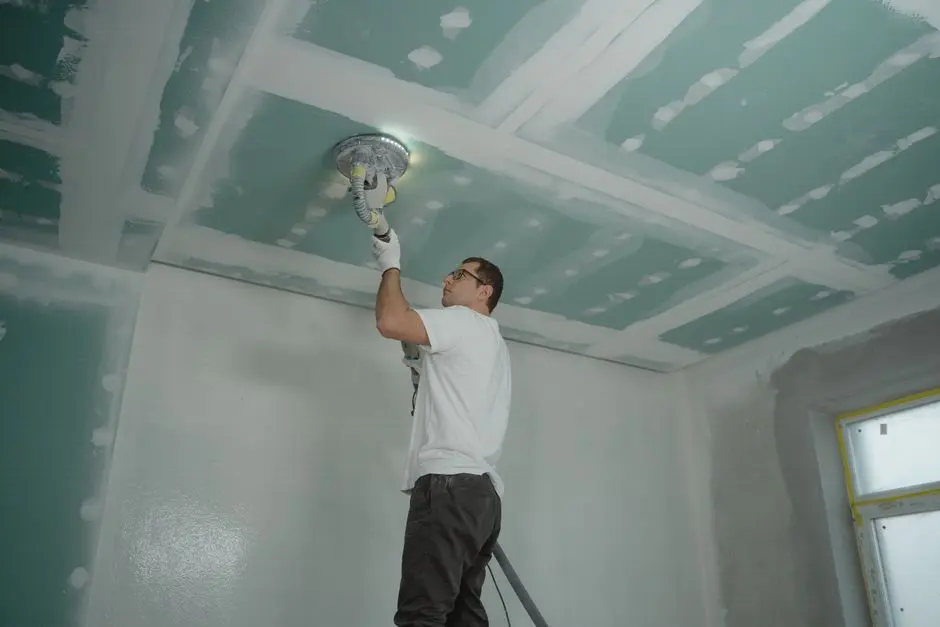
A masonry partition in block or aerated concrete is solid mass. It can be drilled almost anywhere, carries load across its whole surface and behaves as the material dictates. A drywall partition is a hollow structure of steel studs clad in board. It is lighter, faster, takes services without chasing and can be formed into almost any shape.
The fundamental difference is when the details get decided. With a masonry partition you drill as the need arises; with drywall you have to know in advance what goes where, because the nogging is fitted while the frame is built.
Fixings: the most common disappointment
Ordinary boarding takes only light items on special anchors without preparation. A television, upper kitchen units, a wall-hung basin or a shelf of books need either a load-bearing panel in the structure or a bar between the studs. If this is not said before the wall is closed, solving it afterwards means taking part of the boarding off. With a masonry partition the problem hardly exists.
Sound: not the material but the build-up and the details
People routinely assume a masonry partition is always better for sound. It is not that simple. A well designed drywall partition with insulation in the cavity, double boarding and properly treated junctions with floor and ceiling can perform better than a thin masonry one. Conversely, drywall without insulation and with sloppy junctions will carry sound very well indeed.
What holds for both: a gap along the length of the wall or an untreated penetration cancels much of what the structure can do. The details matter more than the choice of material itself.
Speed, dust and wet work
| Aspect | Masonry block | Drywall |
|---|---|---|
| Time to build | Longer, laying then plastering | Shorter, fixing and jointing |
| Moisture in the flat | Wet work, needs curing | Dry construction, minimal moisture |
| Dust | While laying and while plastering | Mainly while sanding joints |
| Load on the floor | Considerably heavier | Light |
| Changing it later | Demolition and debris | Comes apart relatively cleanly |
How to decide
- Write down what will hang on the wall. That is the first and most important input.
- Work out what the wall separates. A bedroom from a living room and a hall from a store are not the same requirement.
- Consider whether the layout is final or may change in a few years.
- Check whether the floor will carry the weight of a masonry partition. In some structures that is a question for an engineer.
- If the home stays occupied, consider dry construction for moisture and time reasons.
A detailed comparison and what has to be settled before a partition is built are on Drywall and partitions. If an old partition has to come out first, carry on to Demolition and brickwork.
More articles
Describe the job
No drawings or exact square metres needed. Write what should be done, what condition it is in now and when you would like it finished. We will ask about the rest.
- We pass the enquiry to a firm that does masonry work in your area.
- If we have no partner in your area, we say so straight away instead of leaving you waiting.
- Photos of the current state help the most. You can send them to [email protected].